Role-based access
Users see the workflows, records, dashboards, and admin functions appropriate to their role, organization, and operating context.
Socilogica builds systems for workflows where records, users, decisions, and source data matter. That means security, access control, privacy, governance, auditability, and data ownership have to be designed into the platform from the beginning.
The exact controls depend on the project, hosting model, client requirements, and data sensitivity. These are the patterns we design around when building serious operating systems.
Users see the workflows, records, dashboards, and admin functions appropriate to their role, organization, and operating context.
Critical actions can be captured with timestamps, owners, status changes, submission history, review paths, and support notes.
Platforms should respect who contributed the data, who may access it, how it may be used, and what should happen when access changes.
Live, missing, fallback, planned, context-only, user-entered, and model-derived data should be labelled clearly in decision-support systems.
Sensitive personal, member, harvester, payment, vessel, research, and operational information should be minimized, protected, and handled intentionally.
Support teams need controlled access, diagnostics, safe remediation paths, exports, and incident-aware workflows without bypassing governance.
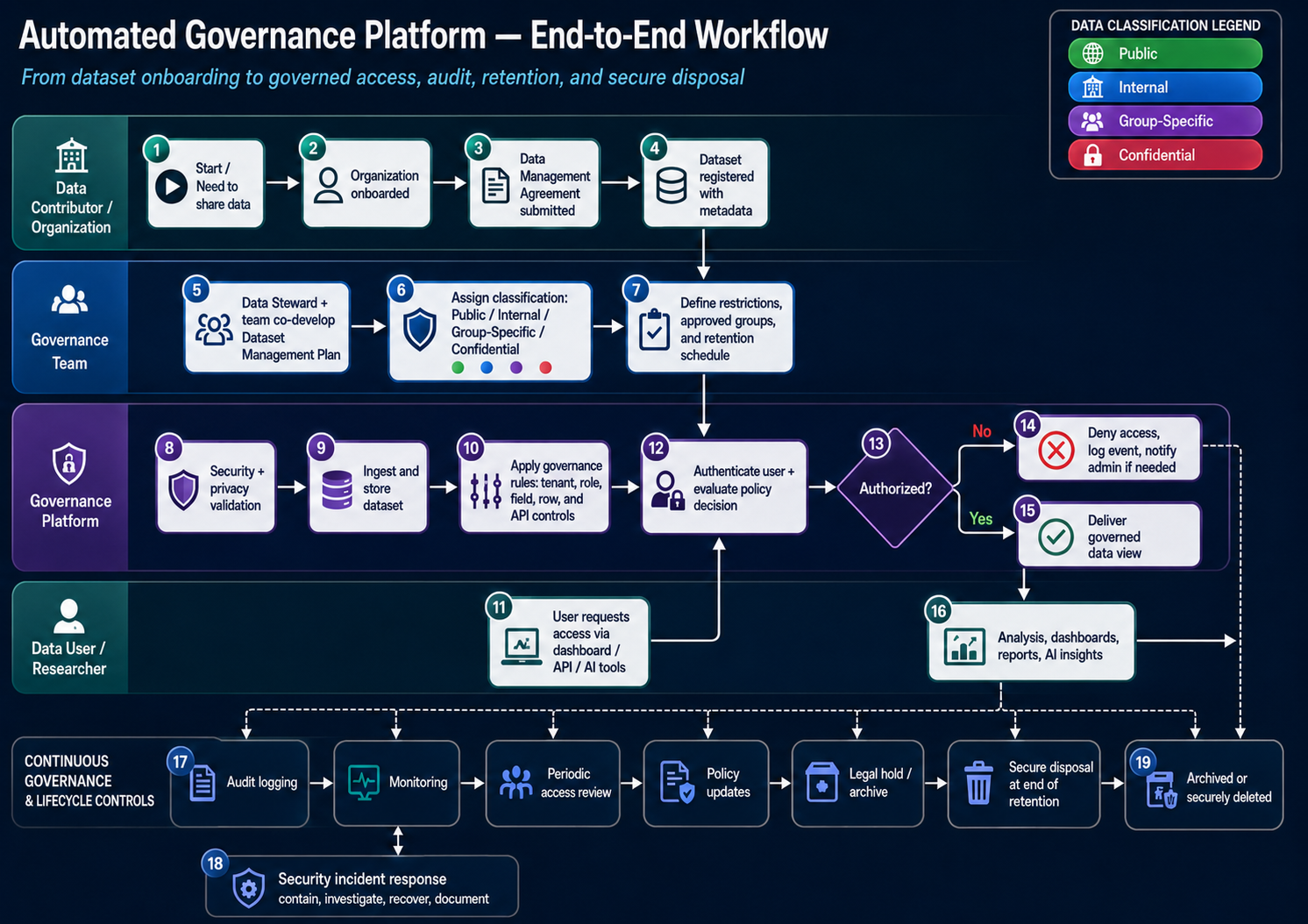
For research, fisheries, associations, and government-facing programs, the platform has to manage the lifecycle: contributor onboarding, agreements, classification, access requests, policy checks, audits, retention, archive, legal hold, and secure disposal.
Appropriate login flows, account states, organization-level access, and role-specific user experiences.
Permission checks across pages, APIs, reports, records, fields, admin tools, and support workflows.
Operational logs, support diagnostics, exception monitoring, status visibility, and reportable system activity.
Retention schedules, exports, archives, secure disposal plans, and change history where the workflow requires them.
Respect sensitive harvester, vessel, trip, licence, catch, buyer, and association records.
Support contributor agreements, classification, access review, dashboards, and secure collaboration.
Design support and reconciliation tools that expose what staff need without turning every user into an administrator.
Keep human review, caveats, source context, and approval paths visible when AI assists reporting or decisions.
Important note
We do not claim certifications, regulatory approval, or government authorization unless they are verified for the specific product, client, and deployment. The stronger story is honest architecture and clear evidence.
We can help design the workflow, governance model, controls, and operating visibility before the system becomes hard to change.